The Programs
Not just lessons. A carefully designed system for every subject.
Every Signal program is built from the ground up: structured by subject, sequenced by skill, and designed to give a student exactly what they need to genuinely improve. Pick a subject below to see what a week looks like.
- 4 programs, one system
- Year 1–12


01 / Mathematics
Mathematics that actually makes sense.
Every concept is sequenced, every gap gets caught early, and every lesson ends with problems that force real understanding, not just recall.

Precision sequencing
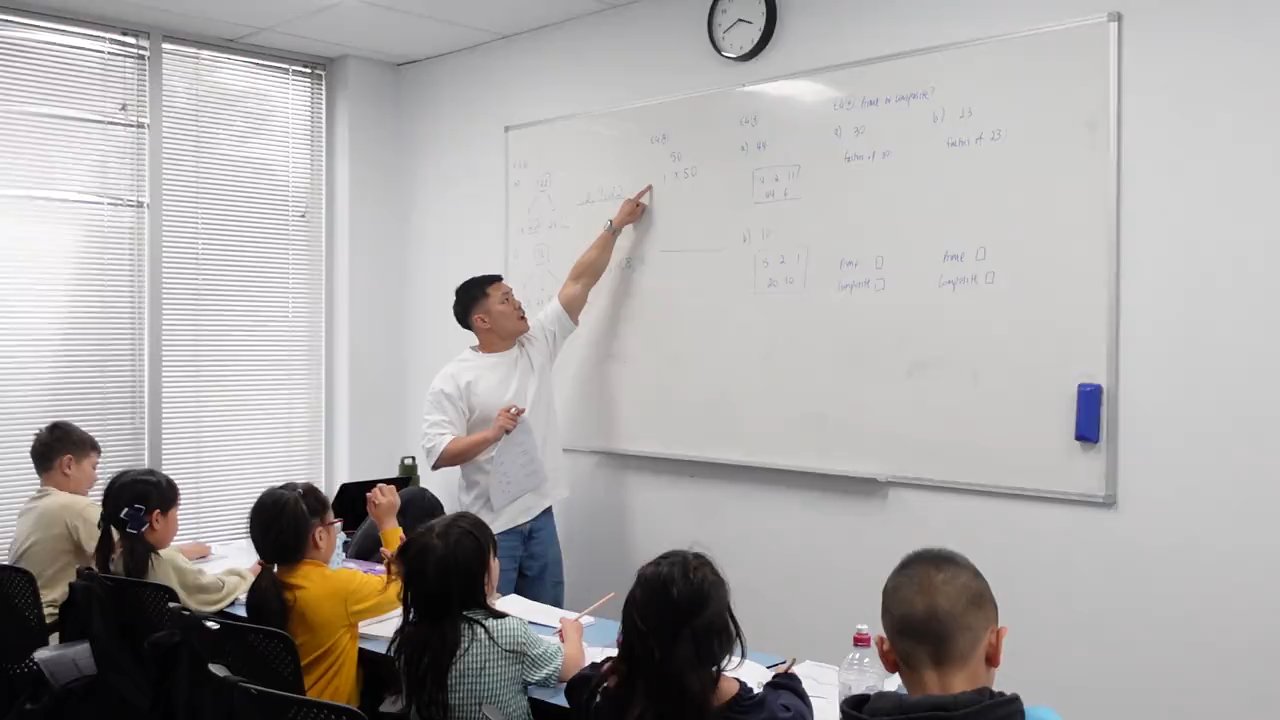
Every topic is broken into every prior skill it needs. By the time a student reaches something new, they already have every tool required to understand it.

Built-in gap detection
Because the program is sequential, knowledge gaps surface early and get addressed immediately, before they hold a student back further.
Worded problems, every lesson
Every lesson ends with worded problems: translating language into mathematics. It’s the skill that separates an average student from a high-achieving one, practised weekly, not occasionally.

Assessments that build exam muscle
A formal assessment closes every major topic. Results go home to parents, not as a verdict on ability but as a way to track growth and build comfort under test conditions.
What your child gets
- Structured workbooks, purpose-built for every lesson, organised by topic and sequenced by skill: a reference a child can keep and return to
- Weekly homework that mirrors what’s covered in class, skill-based questions and worded problems, tracked every week, with parents notified if anything is missed
- Topic assessments, a formal assessment closing every major topic, with results shared so progress is visible, not assumed
- A weekly observation report: homework completion, in-class performance, and what to focus on next
- A 40-week program, classes running 40 weeks a year across 4 terms, aligned to the Australian school calendar
- Maximum 8 students per class, so every student is seen, supported, and called on by name
- Video tutorials on the Signal Portal, one for every Maths topic, so a stuck student can rewatch the worked example and try again without waiting for next week’s class
Anatomy of a 90-minute lesson
Phase 1
The skill is taught first
Before a student attempts a single question, the tutor teaches it, broken down into layers so the reasoning lands, not just the answer.
Phase 2
Independent practice
Students attempt questions on their own in the workbook, where real understanding gets built, not just observed.
Phase 3
Every student is supported
The tutor moves around the room, checking in with every student. If a child is struggling, it gets caught here, not at home that night.
Phase 4
Worded problems applied
Students identify key words, break the question down, and translate it into maths, every lesson, every week.
Phase 5
Mistakes corrected together
The class corrects every answer together. Every student leaves knowing what they got right and what to work on.
Phase 6
Homework reinforces it
Homework mirrors the lesson, skill questions and worded problems, tracked weekly, with parents notified if anything is missed.
Phase 7
Video tutorials, any time
Stuck on a homework question? A video tutorial for every Maths topic is on the Signal Portal, no waiting until next week’s class.
What your child covers, by year level
Select a year level to see the topics covered. Every topic builds on the last.
Mathematics year level
Year 1
Building the essential number foundations, every operation taught with full understanding before moving on.
- Addition and subtraction with carrying and borrowing
- Multiplication and division, including remainders
- Introduction to fractions
- Introduction to decimals
Year 2
Deepening number skills and introducing money and measurement.
- The four operations with larger numbers
- Factors and multiples
- Fractions and decimals
- Money
- Measurement, perimeter and area
Year 3
Consolidating core operations and applying them across a broader range of number types.
- The four operations
- Factors and multiples, HCF and LCM foundations
- Fractions and decimals
- Money
- Measurement, perimeter and area
Year 4
Building fluency across number, fractions, decimals and measurement with increasing complexity.
- The four operations
- Factors and multiples
- Fractions and decimals
- Money
- Measurement, perimeter and area
Year 5
Introducing algebra for the first time, built on the number foundations from prior years.
- The four operations
- Factors and multiples
- Fractions and decimals
- Money
- Measurement
- Introduction to algebra, expressions and equations
Year 6
Consolidating all primary topics and deepening algebraic thinking ahead of secondary school.
- The four operations
- Factors and multiples
- Fractions and decimals
- Money
- Measurement
- Algebra and algebraic equations
Year 7
Secondary Maths begins, expanding into geometry, probability and negative numbers.
- Integers
- Fractions and decimals at full complexity
- Measurement, area, perimeter and volume
- Geometry
- Algebra
- Percentages
- Introduction to probability
Year 8
Deeper algebraic thinking, including indices and linear equations, ahead of Years 9 and 10.
- Integers
- Fractions and decimals
- Measurement
- Geometry
- Algebra and indices
- Linear equations and graphs
- Probability
Year 9
A significant step up in complexity: quadratics, surds and Cartesian geometry ahead of Year 10.
- Algebraic equations and indices
- Financial maths
- Linear and quadratic algebra
- Linear relationships
- Cartesian geometry
- Surds
- Statistics
- Geometry, including triangle theorems
Year 10
Built explicitly as VCE Mathematical Methods preparation, so a student finishing Year 10 at Signal starts VCE ahead.
- Algebraic equations and indices
- Linear and quadratic algebra
- Linear relationships
- Cartesian geometry
- Surds
- Probability
- Measurement
- Trigonometry
- Polynomials
- VCE head start, exponentials, logarithms and circular functions
Mathematics FAQ
Is the Maths program the same for every year level?
The approach is the same: precision sequencing, layered skill-building, and worded problems every lesson. What changes is the topic, growing more complex from Year 1 through Year 10.
What if my child is already behind in Maths?
Every new student is assessed before being placed in a class. Where the assessment finds fundamental gaps, Signal Enhancement gets recommended as an add-on to close them alongside the main program.
How does Signal help with school assessments?
The program covers the full Australian Curriculum, so what’s taught at Signal lines up with what gets assessed at school. Topic assessments also build comfort performing under test conditions, a skill that improves with practice.
What if my child gets stuck on homework?
Every Maths topic has a dedicated video tutorial on the Signal Portal. A stuck student can rewatch the worked example and try again, without waiting for next week’s class.
02 / English
English built around how students actually improve.
From phonics and spelling in early primary to analytical essay writing in secondary, the English program targets every skill that makes up strong literacy. Every year level has a deliberate focus and a structured lesson flow: students don’t just practise English, they learn to think like a writer, a reader, and an analyst.
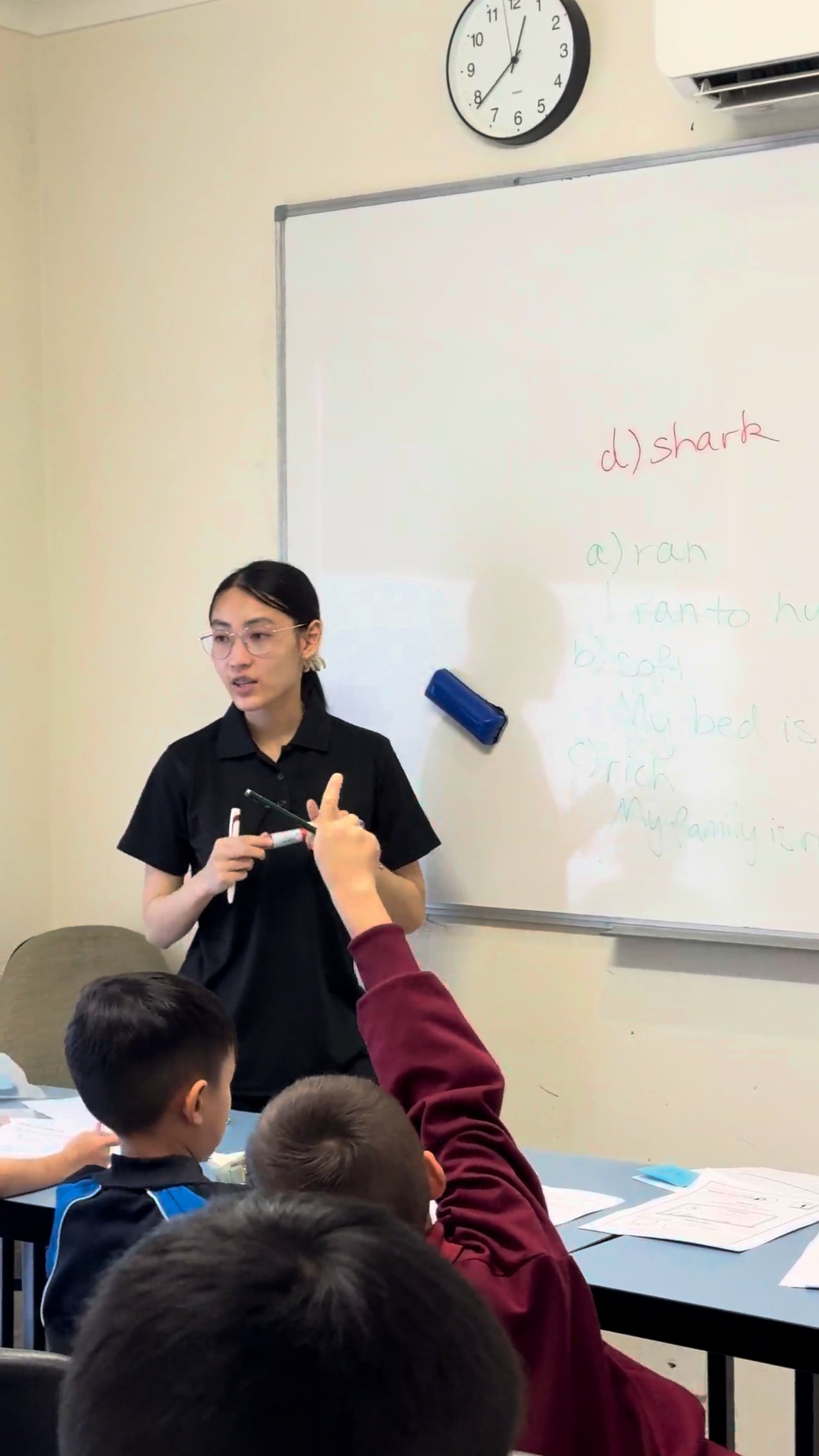
Anatomy of a 90-minute lesson
Phase 1
Skills are taught first
The tutor demonstrates the week’s focus before students attempt anything. No student is left to figure it out alone.
Phase 2
Independent practice
Students apply what’s been taught, building understanding through doing, not just watching.
Phase 3
Every student is supported
The tutor checks in with every student individually. If a child is struggling, it gets caught here.
Phase 4
Writing booklets collected and marked
Booklets get collected, marked at home by tutors, and returned the following week with written feedback.
Phase 5
Feedback applied next lesson
Students apply that feedback to their next piece, building consistent improvement over time.
Phase 6
Homework reinforces it
Weekly homework consolidates what was covered in class.
Program by year level
Building the foundations of literacy.
A heavy focus on phonics: digraphs, tricky letter combinations, and sound patterns taught in a deliberate sequence, with every lesson also covering reading comprehension, grammar and punctuation, and spelling.
- Phonics in sequence
- Reading comprehension
- Grammar and punctuation, age-appropriate
- Spelling, reinforced weekly
Finding a voice as a writer.
Creative and persuasive writing are the centrepiece, explored in structured blocks each term. The tutor demonstrates the week’s writing focus before students write independently in their booklets, which get marked at home and returned the following week with feedback.
- Reading comprehension every lesson
- Grammar and punctuation, NAPLAN-aligned from Year 3
- Spelling, reinforced weekly
- Creative writing, co-construct model
- Persuasive writing, structured across the term
- Written tutor feedback, booklets marked and returned weekly
- Signal Enhancement available for students needing extra grammar support
Building toward VCE English.
Text response essays, argument analysis, and creative writing: the three core areas, and the same skills VCE demands. Students get the vocabulary and sentence stems that lift marks quickly, while being trained to analyse texts with real depth.
- Text response essays, taught systematically
- Argument analysis
- Creative writing, co-construct model, booklets marked weekly
- Vocabulary and sentence stems
- Grammar and punctuation, NAPLAN-aligned formats
- Written tutor feedback, weekly
- Signal Enhancement available for students needing extra grammar support
English FAQ
What is the co-construct model?
The tutor demonstrates the week’s writing focus before students attempt it, removing the “I don’t know where to start” problem.
How does the writing booklet feedback work?
Students write in class, tutors mark at home, and booklets return the following week with feedback. Students apply it to their next piece, a cycle that builds consistent improvement.
Is the program aligned to what’s taught at school?
Yes, aligned to the Australian Curriculum across every year level. Grammar and punctuation from Year 3 follow NAPLAN-style formats.
My child struggles with grammar. What can Signal do?
Grammar is covered every class. For students needing more, Signal Enhancement provides targeted grammar, punctuation and spelling practice as an add-on.
03 / Signal Enhancement
The add-on for students who need the gaps closed first.
Some students aren’t behind because they can’t keep up. They’re behind because something earlier never fully clicked. Signal Enhancement finds that gap and closes it.
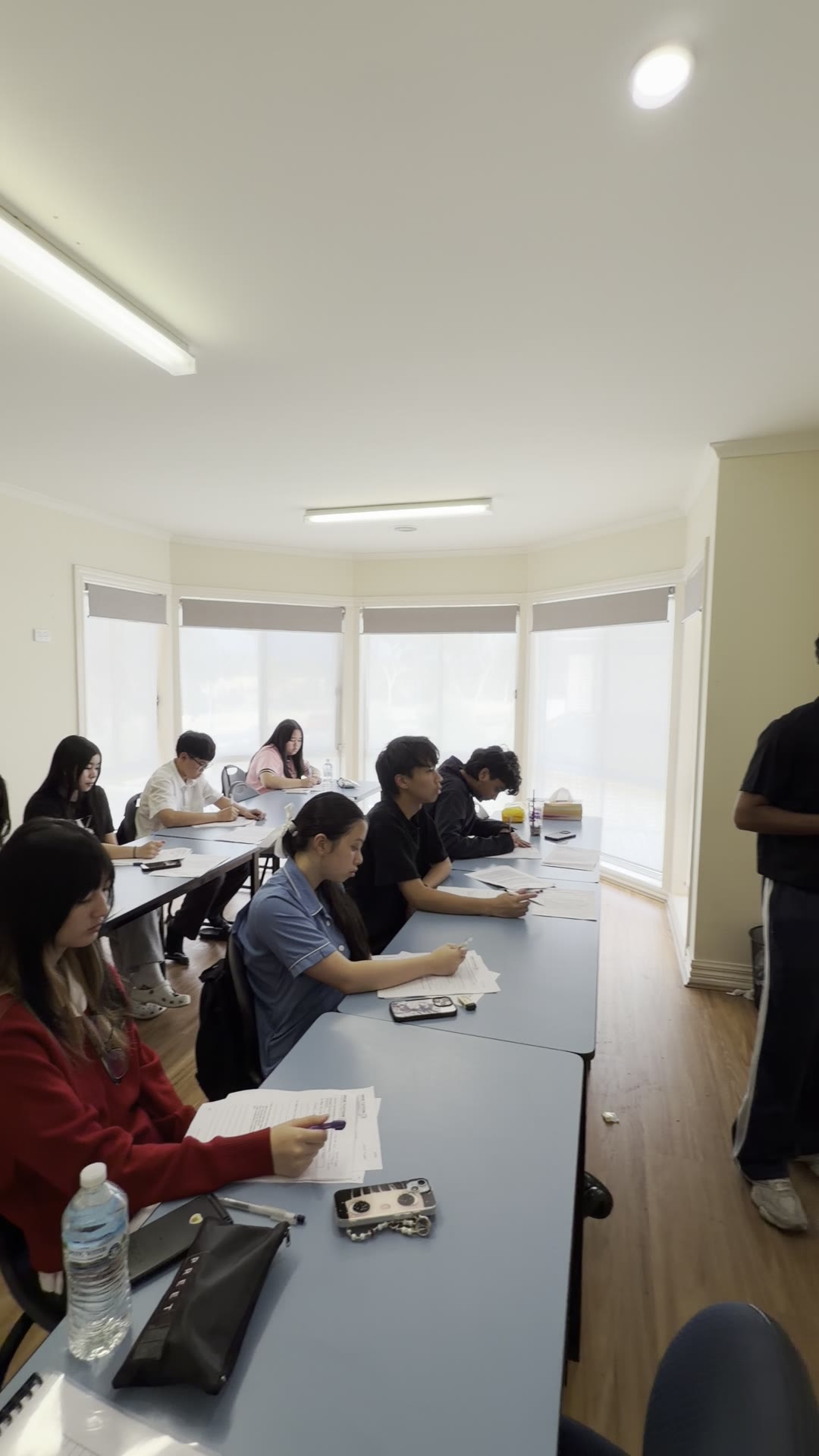
Signal Enhancement is a targeted add-on, run alongside the main Maths or English program, not instead of it. Rather than pushing a student forward into new content, it focuses on the specific weakness holding them back, so new concepts get learned on solid ground instead of a shaky one.
Who it’s for
- A student assessed as having a gap earlier than their current year level
- A student keeping up in class but struggling on the same type of question every week
- A student a tutor has flagged in a written report as needing extra support
How it’s assigned
Placement into Signal Enhancement follows the same assessment every new or existing student goes through: a tutor identifies the specific gap, and it gets addressed directly, not guessed at.
04 / VCE
VCE support built around a student’s actual SACs and exams.
Not a generic revision course. VCE lessons at Signal are private or small group, built around what a specific student is facing that term.
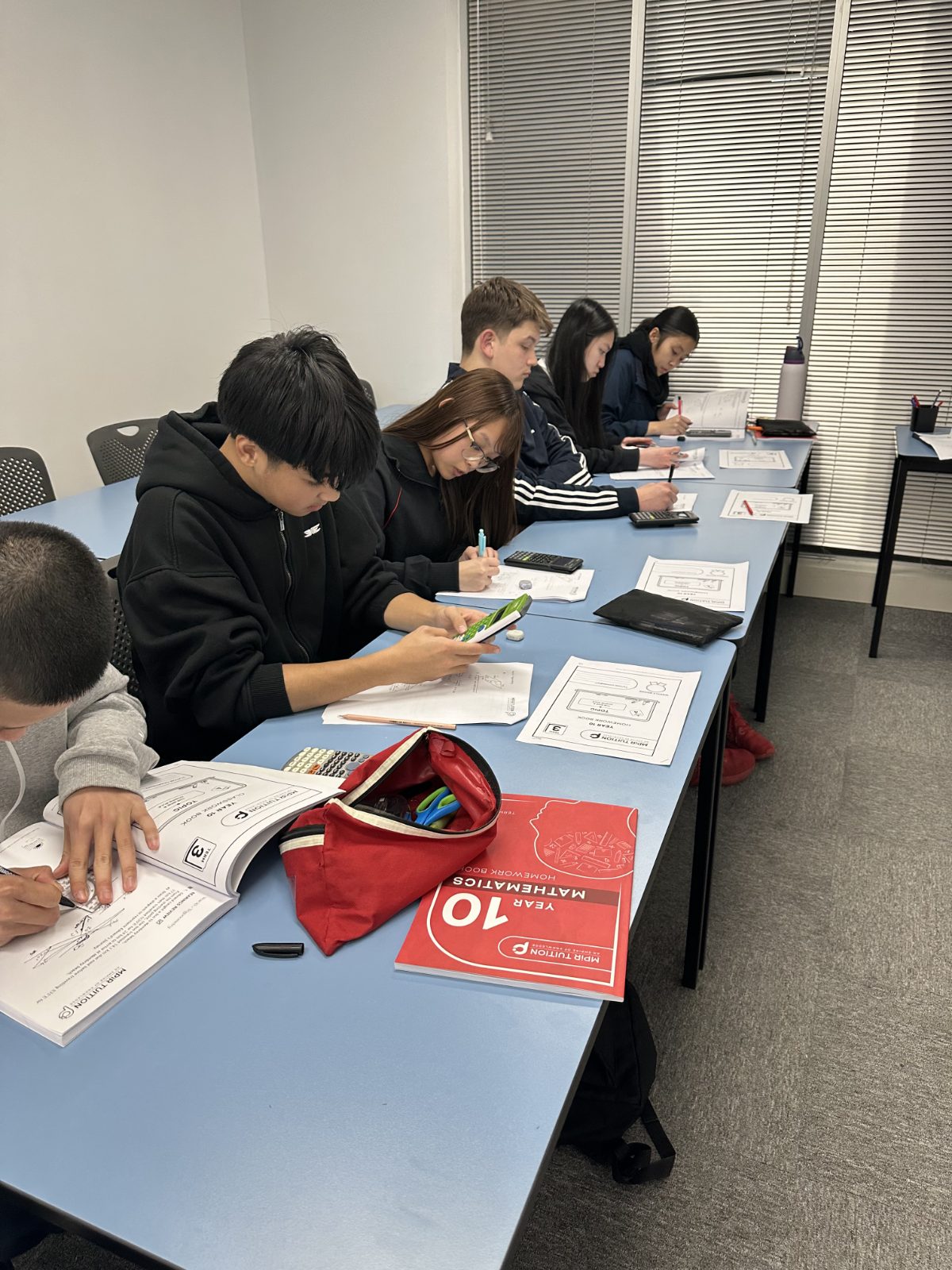

Private or small group lessons
Year 11 and 12 students get one-on-one or small group time, not a lecture-style class built for the whole cohort.

Built around what’s coming up
Lessons target a student’s actual upcoming SACs and exams, not a fixed syllabus that ignores the school calendar.

A head start from Year 10
Signal’s Year 10 Maths program already covers VCE Mathematical Methods content, exponentials, logarithms and circular functions, so a student walks into Year 11 ahead, not starting cold.
Ready to see the system in action?
Book a free lesson. No commitment, no pressure: bring a child along and let the class speak for itself.
Book My Free LessonWe’ll be in touch within 24 hours to confirm.